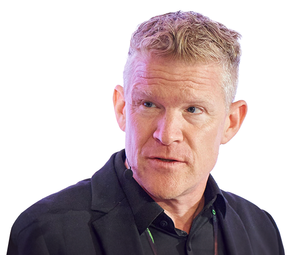
Photo of Bengt Sture by Jonatan Sverker, originally published by Dagen on the 10th of April 2015
I worked in carbon black more than ten years ago. After leading a team of 13 and selling carbon black across EMEA, I started my new adventure in green carbon black.
Jean-Paul BOUYSSET invited me to the 22nd Annual ETRA European Tyre Recycling Association Conference, held on 25–27 March 2015 at the Grand Sablon Hotel in Brussels, where I met many important industry contacts, including the late valerie shulman , my mentor and friend François Terrade , researcher Céline Gisèle Jung , chemical engineer Bogdan Florin Brosteanu , inventor Frank Riedewald and many more.
I also met an impressive Swedish gentleman wearing a hat: Bengt Sture Ershag from Scandinavian Enviro Systems AB (publ).
Bengt presented “Scandinavian Enviro Systems – The Swedish Way”. He had my full attention by his third slide when he said:
“Let’s face it, what pyrolysis of tyres is all about is (r)CB of good quality.”
At that point, Bengt had already been working on the subject for more than 21 years. He went on to say that rCB should be comparable to N550 carbon black or better. I remember that we had a vivid discussion. I might even call it a dispute.
It was all about the N550 comparison!
During my carbon black years, I received about one enquiry per week from hopeful pyrolysis companies. One day, I gave in because it was a Bulgarian friend of a British friend. I asked my Italian technical director to analyse the carbon char and the results were truly awful across all our test methods.
I remember feeling embarrassed that I had submitted such a poor char to my Italian laboratory.
I went into my conversation with Bengt carrying exactly that experience.
Bengt argued that Enviro had just succeeded in replacing 100% of N550. This was probably the application development that led to Enviro’s inspiring collaboration with AnVa Polytech AB for injection-moulded EPDM chassis & body plugs used in Volvo Cars.
Bengt even named his (r)CB like an N550, "EnviroCB™ P550".
In EPDM, N550 provides balanced reinforcement, dimensional stability and reduced die-swell. However, it is also used in many undemanding applications where N600 or N700 series carbon blacks might also work.
That was precisely my objection. Replacing an N550 in one specific application does not make the rCB equivalent to N550 across all properties and applications.
Bengt closed his presentation with:
“Can Scandinavian Enviro Systems do this? Yes.”
That was eleven years ago.
In 2017, I advised Michelin on the who-is-who of the rCB industry and I found that Michelin already had a very good understanding of the industry.
In 2020, Michelin invested €3 million for a 20% stake in Enviro.
I love the Michelin credo "We can do this. We are Michelin."
When Michelin announced a 30 ktpa ELT recycling facility in Chile using Enviro technology, almost everyone, including me, thought Michelin was beginning to integrate into rCB and TPO production.
Michelin founded Michelin Specialty Materials Recovery, MSMR, in Chile in 2020. However, MSMR ultimately started with mechanical recycling of OTRs in late 2024 rather than with Enviro pyrolysis technology.
In 2021, I was in bed with COVID when I received a call announcing the “rCB Rubber Call to Action” collaboration between Michelin and Bridgestone. At first I thought this was a joke.
But rCB Rubber appointed me as the industry expert and the rCB Rubber team delivered three presentations at the Smithers Tire & Rubber Conferences rCB Europe conferences: Amsterdam in 2021, Berlin in 2022 and Barcelona in 2023.
I realised that Michelin’s investment was probably mainly intended to de-risk the venture so that a more aligned investor could step in.
That more aligned investor was Antin Infrastructure Partners.
Infiniteria was incorporated in late 2022, and Antin’s involvement became public in March 2023.
When I first heard about the disharmony between Enviro and Infiniteria, I thought of the David versus Goliath story in the Bible. Bengt actually posted about it.
The first publicly visible sign was Enviro’s announcement of a delay to hot commissioning.
By February 2026, Infiniteria alleged repeated delays, cost overruns and reduced engineering resources from Enviro.
At the end of February 2026, Enviro entered a company reorganisation. By then, the original construction schedule had clearly broken down, although no precise date for Enviro stopping work has been publicly disclosed.
I am torn. I do not have all the information.
I would have thought that, by 2025, Uddevalla was already too far advanced to fail, with the buildings completed and all five pyrolysis reactors delivered and installed.
I would have wished for Enviro and Infiniteria to find a way to finish the construction together, with additional resources or external financing.
When I filmed the opening of Circtec on January 27th 2026, I anticipated that my next video project would be the opening of the Uddevalla plant.
Ultimately, I would have wished for Bengt that after 32 years of work he could see the fruits of his work this year.
In any case, Enviro today presented a restructuring plan proposing that creditors receive 30% of their claims.
The plan includes a conditional new financing facility of up to SEK 100 million and an expansion of the Alumni Capital equity facility to as much as SEK 80 million. Enviro also said that its restructuring period is proposed to continue until 27 November 2026.
What does this mean for the Uddevalla site?
We cannot say with certainty.
Uddevalla’s completion now appears to depend primarily on Infiniteria. I hope Infiniteria manages to finish the plant soon. The whole rCB industry wants Uddevalla to succeed.
And I am glad that Infiniteria CEO Kajsa Ryttberg-Wallgren will join the CEO panel at rCB Europe 2026 in Amsterdam on 4 November.
Maybe she will bring some good news, for Uddevalla, for Bengt, for the rCB industry.